Ta’leem for the Jamaat of Daar-ul-Ehsaan, USA
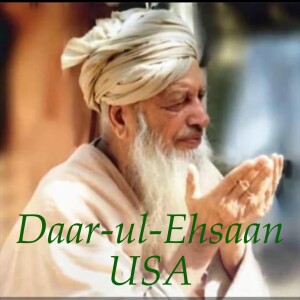
Immerse yourself in this captivating podcast featuring rare recordings from the 1990s by Hazrat Muhammad Akhtar ’Ali, the esteemed Ameer Emeritus of Daar-ul-Ehsaan, USA. Designed for the devoted Jamaat of Daar-ul-Ehsaan and the mureeds of Shaikh-ul-’Aalam Abu Anees Muhammad Barkat ’Ali (Qaddas Allahu sirrah ul-Aziz), lovingly called “Babaji”, these treasured audio archives offer a profound glimpse into the spiritual teachings and guidance of an extraordinary era.
Listen on:




Episodes
Sunday Sep 28, 2025
Sunday Sep 28, 2025
Transcending the False Self: From Witnessing to Divine Presence
This recording from a Friday evening gathering (October 12, 1995) explores the spiritual process of transcending the false self. The speaker explains the real nature as a receptive mind, body, and a silent soul, and describes "witnessing" as a transitional practice used to see the ego from outside and begin letting it go.
The talk emphasizes that the ego-driven self is an illusion that pushes and motivates action; once transcended, the soul remains as a peaceful witness while all movement and guidance come from Allah. True realization is not scholarship or external knowledge alone but the inner surrender where the word "I" fades and Allah acts through the servant.
The episode outlines practical landmarks: avoiding attachment, learning to relinquish desires ("die before sensory death"), and recognizing that holding on prevents spiritual freedom. Using vivid analogies (a stick in the ocean, a monkey with peanuts), the speaker urges wholehearted letting go so the seeker becomes a passive instrument in Allah’s hands and attains spiritual immortality.
Sunday Sep 28, 2025
Sunday Sep 28, 2025
Transcending the Ego: A Mystic's Journey in the Jungle of the Heart
This episode (Friday evening meeting, October 19, 1995) explores the Sufi path of transcending the ego through extracts from Shaykh ul Azzam Abu Anees Muhammad Barkat Ali قَدَّسَ اللّهُ سِرَّه الْعَزِيز Words of Wisdom, Manifestations of the Stages of Blessing (Vol. 2). Using the symbolic account of a journey through a dark jungle, the Shaykh unfolds stages of spiritual practice: constant zikr (remembrance of Allah), complete seclusion, patient silence, dignified non-engagement, truthfulness, and freedom from jealousy.
Guided by metaphors and Qur’anic injunctions, the narrator emphasizes total reliance (tawakkul) on Allah, the dissolution of the false ‘I’, and the realization that all causes ultimately belong to Allah alone. The episode connects classical Sufi stories and teachings—on sainthood, repentance, and annihilation of self—with practical guidance for inner transformation, culminating in an invitation to persist in these practices to attain true tawhid (unity of God).
Sunday Sep 28, 2025
Sunday Sep 28, 2025
Awaken from the Dream: Understanding the Ego and True Self
This episode—recorded at a Friday night meeting—explores the Islamic understanding of the ego (nafs) and the heart’s diseases, stressing that insight must become practice. The speaker explains that our true identity is the eternal soul, not the changing body, mind, or social labels.
Key ideas include the distinction between soul, mind and body: the soul is changeless, formless, and rooted in love and compassion, while the mind stores memories that create the illusion of a personal identity. Memories and habitual thinking project past and future into the present and trap us in an unreal dream-like life.
The talk offers practical tools: witness your thoughts without reacting, use zikr and stillness to quiet the mind, distinguish work (service) from mere activity driven by desire and fear, and practice detachment by repeatedly reminding yourself who you are and who you are not.
The speaker highlights obstacles—desire and fear—as the main hijab between us and our true nature. Pain belongs to the body; suffering to the mind. Freedom and contentment come from relinquishing cravings, trusting Allah’s provision, and reducing emotional attachment to memories and outcomes.
Ultimately, waking up from the dream means restoring harmony among soul, mind, and body: living in mindful awareness, free from clinging, experiencing peace, love without possessiveness, and a steady, practical path of purification.
Sunday Sep 28, 2025
Sunday Sep 28, 2025
Beyond the Self: Transcending "I"-ness to Find Allah
This episode records a Friday/Saturday gathering with the blessings of our Shaykh Hazret Abu Anees Muhammad Barkat Ali قَدَّسَ اللّهُ سِرَّه الْعَزِيز , focusing on spiritual purification and the transcendence of ego (the "I"-ness). The Shaykh explains that believing in a separate inner entity causes suffering and prevents total submission and peace.
He teaches that the body and mind are a psychosomatic machine and that true realization is recognizing Allah as the only source of power and action. When the purified intellect (aql) surrenders, one sees that all energy and deeds come from Allah, and the individual is a witness rather than the doer.
The talk introduces the idea of collective consciousness, contrasts temporal life with Allah’s eternity, and emphasizes practical guidance: divide one’s day, pursue lawful (halal) earning, and repeatedly remind oneself that Allah is the doer. With patience and sincere belief, the Shaykh says, Allah will "ripen" the believer and grant deeper realization.
Sunday Sep 28, 2025
Sunday Sep 28, 2025
Beyond the Illusion of "I": Embracing the Witness
In this episode (July 25, 1996), the teacher explores how to transcend the false self or ego through the practice of dhikr. He explains three states of consciousness: deep sleep, dreaming, and waking, and contrasts the fleeting, changeable waking state dominated by the illusion of "I" with an unchanging, blissful no-awareness witness that always remains.
Using examples from sleep, dream, and spiritual practice, the talk shows how sincere remembrance (Ya Raheem and La ilaha illa Allah) can return attention to the inner witness and to the eternal reality beyond the body and mind. The witness watches thoughts and desires without identifying with them, allowing inner states to surface without struggle.
The speaker emphasizes negating the illusion of ownership and control—recognizing that everything belongs to Allah—and cautions against result-orientation while practicing dhikr. Practical guidance includes watching thoughts as a witness, returning to the no-awareness state through regular zikr, and trusting that when one is established in remembrance, Allah’s mercy guides the rest.
Tuesday Oct 28, 2025
Tuesday Oct 28, 2025
Pleasing Allah, Not People: Family Life & Spiritual Tests
This episode is a Saturday morning Ta'alim talk (March 23, 1996) that explores how Allah tests believers through wealth, health, spouses, and children, and emphasizes the need for purification and surrender to Allah.
The speaker explains the difference between seeking one's haq (right) and seeking satisfaction for the ego, urging listeners to pursue the pleasure of Allah and the Prophet ﷺ rather than trying to satisfy people.
Using the Prophet's ﷺ endurance during the Meccan boycott as an example, the lecture highlights patience (sabr), the limits of human responsibility for others' salvation, and the concept of tawfiq — that guidance and success come from Allah.
The talk also outlines basic obligations (salah, fasting, zakat, hajj) as minimums, stresses that spiritual guidance and community practices should not be enforced by force, and encourages attachment to Allah and sincere following of the shaykh for clarity and mercy in family life.
Tuesday Oct 28, 2025
Tuesday Oct 28, 2025
والصلاة والسلام على رسول النبي الكريم أعوذ بالله من الشيطان الرجيم بسم الله الرحمن الرحيم
Heartfelt Dhikr & Salawat: A Loud Assembly of Remembrance
This episode presents a full session of dhikr (remembrance of Allah) and Salat al-Nabi (sending blessings on the Prophet ﷺ), performed loudly in congregational style across many centers. It includes a special, heartfelt du'a at the end and offers listeners the option to request written copies of the dhikr and supplication.
The recording explains the virtues of loud (jahr) zikr and Salat al-Nabi ﷺ, citing hadiths and examples: multiplied rewards, angels bearing witness, increased barakah, spiritual healing, and communal benefits. It highlights recitations such as Bismillahirrahmanirrahim, Surah Al-Fatihah, Surah Al-Ikhlas, and the powerful names Ya Hayy Ya Qayyum.
The episode also shares stories and practical examples demonstrating spiritual and physical benefits—healing, protection, and steadfastness—encouraging regular practice, sincerity, and joining communal remembrance for greater reward.
Listeners are invited to seek tawfiq (divine help) to keep up consistent dhikr, to make use of these practices at home and in gatherings, and to pray for the community and those in need.
Wednesday Nov 26, 2025
Wednesday Nov 26, 2025
On the blessed first night of Rajab, this lecture explores the importance and virtues of Jehri Zikr (loud remembrance of Allah). Drawing on the teachings of Shaykh Abu Anees Muhammad Barakat Ali (قَدَّسَ اللّهُ سِرَّه الْعَزِيز), it explains how loud dhikr educates and attracts people, keeps the heart and mind focused, invites angels, spreads blessings, and serves as a spiritual remedy and source of peace. The talk also emphasizes that all forms of remembrance — recitation of the Qur'an, prayer, teaching, and silent dhikr — are valid, while urging revival of public majalis of zikr in every place of daily life.
The speaker highlights practical benefits of loud dhikr, its historical roots in Qur'anic revelation and Prophetic practice, and its role in community building and spiritual healing. He calls for organized practice, regular timing, appropriate places, strength, and sincere hearts to revive and spread the dhikr of Allah across societies.
Wednesday Nov 26, 2025
Wednesday Nov 26, 2025
It is a warm Friday evening, 28 August 1997. A circle of seekers sits in quiet zikr as Shaykh Abu Anees Muhammad Barkat Ali (قَدَّسَ اللّهُ سِرَّه الْعَزِيز) opens a simple image—shama and parwana, lamp and moth—and turns it into a map of the heart. He invites the listeners to watch the moths: one dances around the naked flame, intoxicated yet safe; another throws itself into the fire and is consumed. Through this ancient poetic simile the Shaykh unfolds a living story about love that is both gift and test.
We move with him into the truth that love is not our invention but a bestowal from Allah. The account is intimate and exacting: early love keeps two selves intact—lover and beloved—making admiration possible but incomplete. What is offered next is a perilous grace: annihilation. The Shaykh traces the path in stages—fana fi Shaykh, fana fi Rasul, and finally fana fi Allah—showing how the seeker must first surrender to a perfected guide, then be led through the Prophet’s presence, until only the Beloved remains.
Each stage is told like a scene: the singing bird that cannot reach the ocean of union, the seeker who slips into the Shaykh’s shadow and loses the ‘I’, the astonishing moment when all of humanity seems to dissolve and only the beloved’s light remains. Along the way the Shaykh teaches adab (etiquette), warns against proud claims of love, and reminds us that true devotion is earned, given, and often hidden until God chooses to unveil it.
The narrative deepens into a reflection on creation: why love a being that dies? The Shaykh answers with another image—the sugar hidden in a jar—urging listeners to seek the Maker within the made. The final counsel is precise and urgent: die before your death. To die to self is to discover the hidden Treasure. This episode reads like a parable and a manual, drawing listeners into a journey of heart and surrender, urging them to return again and again to these words until the flame has done its work.
Wednesday Nov 26, 2025
Wednesday Nov 26, 2025
Born in Submission: How the Ego Forms — Nafs, Parenting & Healing
In this March 22, 1997 talk the speaker addresses the Jama'at on the origin and development of the ego (nafs), opening with the Qur'anic and Prophetic teaching that every child is born in a state of fitrah — a blank, submissive nature. He explores how parental messages and early experiences imprint identity onto that blank tape, producing the false self known as Nafs al-Ammarah.
Guest contributions from Brother Asif Toor and Brother Tariq prompt a deeper look at the roles of trauma, repression and the unconscious: how physical and emotional abuse, withdrawal of love, and early shocks are buried and later shape anger, rebellion, guilt and hypocrisy. The talk explains how these buried experiences create defense mechanisms, secret lives and destructive impulses.
The speaker contrasts three aspects of the inner landscape: the taped parental imprint, the reactive emotional nafs (anger, fear, rebellion), and the aql (reasoning mind), which is often suppressed by the first two. He discusses Nafs al-Lawwamah (the blaming self), obsessive guilt, and the damaging parent-voice that can hijack adult conscience and spiritual practice.
Practical guidance centers on healing, not punishment: zikr (remembrance of Allah), istighfar (seeking forgiveness), compassion, and conscious love as therapeutic tools. The speaker warns against using coercion, fear and guilt in parenting or in spiritual struggle, urging instead patience, gentle reasoning and demonstrating Islam through lovable conduct.
Drawing on examples from the Prophet’s ﷺ compassionate leadership, shaykhly role models, and the silsila tradition, the lecture emphasizes the importance of wise, experienced guidance for deep inner work. The silsila is presented as a living lineage that helps the wounded recover and reorient toward their true soul-nature.
The episode concludes with concrete parenting advice—affirmation, reasoned explanation in the child’s language, affectionate correction, and modeling of humility—and a reminder that inner transformation is a process: repentance, healing, and steady zikr restore the heart, allowing the aql and the soul to re-emerge from beneath the false ego.

Welcome
Immerse yourself in this captivating podcast featuring rare recordings from the 1990s by Hazrat Muhammad Akhtar ’Ali, the esteemed Ameer Emeritus of Daar-ul-Ehsaan, USA. Designed for the devoted Jamaat of Daar-ul-Ehsaan and the mureeds of Shaikh-ul-’Aalam Abu Anees Muhammad Barkat ’Ali (Qaddas Allahu sirrah ul-Aziz), these treasured audio archives offer a profound glimpse into the spiritual teachings and guidance of an extraordinary era.