Ta’leem for the Jamaat of Daar-ul-Ehsaan, USA
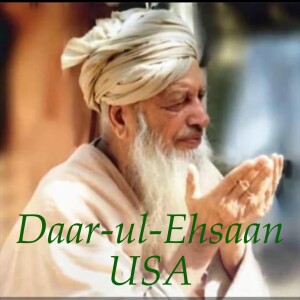
Immerse yourself in this captivating podcast featuring rare recordings from the 1990s by Hazrat Muhammad Akhtar ’Ali, the esteemed Ameer Emeritus of Daar-ul-Ehsaan, USA. Designed for the devoted Jamaat of Daar-ul-Ehsaan and the mureeds of Shaikh-ul-’Aalam Abu Anees Muhammad Barkat ’Ali (Qaddas Allahu sirrah ul-Aziz), lovingly called “Babaji”, these treasured audio archives offer a profound glimpse into the spiritual teachings and guidance of an extraordinary era.
Listen on:




Episodes
Saturday Jul 20, 2024
Saturday Jul 20, 2024
The Essence of Worship in Islam: Beyond Rituals and Towards Ehsaan
In this enlightening episode, we delve into the profound aspects of worship in Islam, exploring its fundamental purpose and the higher state of Ehsaan. Our discussion is centered around the Hadith of Jibreel, where the angel Jibreel (Gabriel) questions the Prophet Muhammad (peace be upon him) about the essence of faith (Iman), submission (Islam), and excellence in worship (Ehsaan).
We revisit the core elements of worship: love for Allah, obedience, trust, fear and hope, and being in harmony with Allah's decree. The episode emphasizes the importance of self-purification as a means to achieve true worship, highlighting how our ego can obstruct our spiritual vision and connection to Allah.
Join us as we explore the universal truths of Islam, the necessity of self-purification, and the ultimate goal of worshipping Allah as if we see Him, or at least with the awareness that He sees us. This episode offers a comprehensive view of worship that transcends mere rituals, aiming to inspire a deeper, more authentic connection with the Divine.
Wednesday Jul 31, 2024
Wednesday Jul 31, 2024
The Essential Role of Hadith in Understanding Islam
In this episode, we delve into the crucial importance of Hadith in the life of a Muslim. The discussion begins with a thorough introduction to Hadith, covering its meanings and significance. We explore how the Holy Companions, may Allah be pleased with them, relied on the Sunnah of the Prophet Muhammad ﷺ for guidance in every aspect of life.
The episode references historical texts like Tariq-e-Kamil and Tariq-e-Khulafah to illustrate the pivotal role of Hadith in Islamic governance, particularly during the selection of Hazrat Uthman as the next Khalifa after Hazrat Umar's demise. We address common misconceptions that the Quran alone is sufficient for understanding Islam and argue that the Quran's teachings cannot be fully comprehended or practiced without the Sunnah of the Prophet Muhammad ﷺ.
Through various examples, the episode emphasizes the rigorous methods used by Islamic scholars to preserve the authenticity of Hadith. We highlight the contributions of Imam Malik and his compilation, Muwatta, which was created with the assistance of numerous Tabi'een and Sahaba who were alive during its compilation. The importance of Hadith is further reinforced by pointing out that rejecting Hadith undermines the historical and intellectual foundations of Islam.
Additionally, the episode discusses the consequences of denying Hadith, both historically and in contemporary times, and how such denial leads to confusion and disunity among Muslims. We also touch upon the unique and unparalleled love and dedication the Companions had for the Prophet Muhammad ﷺ, which ensured the meticulous preservation of his sayings and actions.
Finally, we underline the essential role of Hadith in understanding and practicing various aspects of Islamic life, from prayer to legal rulings, and affirm that the preservation of Hadith is a divine arrangement intended to guide Muslims until the end of time.
Thursday Aug 01, 2024
Thursday Aug 01, 2024
Pathways to Purification: Commitment, Repentance, Remembrance, and Blessings
Today is September 15th, our Saturday meeting. We start by thanking Allah ﷻ for His countless blessings and for creating us as human beings. We express our gratitude for the guidance and light of Islam and for being protected from the evils of this world.
Our focus today is on the various aspects of self-purification. We discuss the essential components needed for this journey: total commitment to Allah’s invitation, repentance and seeking forgiveness, constant remembrance of Allah (dhikr), and sending blessings upon the Prophet Muhammad ﷺ.
We emphasize the importance of total dedication in our pursuit of purification. Just as success in worldly endeavors requires commitment, so does our spiritual journey. Commitment helps us to concentrate and avoid distractions, allowing us to focus on our spiritual goals.
The act of repentance (tawbah) and seeking forgiveness (istighfar) is crucial. Recognizing our sins, feeling genuine remorse, and making a sincere intention not to repeat them purifies our hearts. This process helps us to maintain humility and keeps our ego in check.
Remembrance of Allah (dhikr) plays a vital role in achieving inner peace and tranquility. It provides deep mental rest, allowing for the healing of our emotional conflicts. Different forms of dhikr, whether silent or verbal, help to purify our hearts and minds, drawing us closer to Allah.
Sending blessings upon the Prophet Muhammad ﷺ (durood) not only brings Allah’s blessings upon us but also increases our love and respect for the Prophet ﷺ. This love and attachment to the Prophet’s way of life naturally diminish our worldly attachments and desires.
We conclude with a heartfelt prayer for guidance, the ability to act upon our knowledge, and the strength to remain dedicated on this path of purification.
Thursday Aug 01, 2024
Thursday Aug 01, 2024
The Essence of Purification in Islam
In this insightful episode, we delve into the fundamental concept of purification in Islam. Purification is explored as a crucial means to align oneself with the Sharia and the life of the Prophet Muhammad ﷺ. We discuss how purification reaches the root of our impurities, uprooting them to foster a harmonious existence with the divine commandments.
We highlight the importance of not becoming obsessive about purification, understanding it as a means to an end rather than an end itself. The episode covers various aspects, including the dangers of control and expectations, the significance of unconditional love, and how these elements can hinder or enhance our spiritual journey.
Furthermore, we explore the stages of nafs (self) from nafs al-ammarah (the commanding self) to nafs al-mutma'innah (the tranquil self), and how the process of purification transforms the ego to become obedient to Allah's will. The role of conscience, the importance of gratitude, and the need for continuous self-reflection and repentance are also discussed.
Join us as we uncover the profound wisdom embedded in the process of purification, aiming to attain a state of complete submission to Allah, and ultimately, achieving inner peace and divine wisdom.
Friday Aug 23, 2024
Friday Aug 23, 2024
This episode, dated November 24, 1990, embarks on an enlightening journey into the Tafsir of Surah Al-Fatiha, the opening chapter of the Holy Qur'an. With prior sessions dedicated to understanding the compilation and science of Tafsir, the focus now shifts to this pivotal Surah revealed in Makkah.
Surah Al-Fatiha, consisting of seven verses, holds immense virtues and significance. It is not only the starting point of the Qur'an but also the essence encapsulating the core teachings of Iman (faith) and righteous deeds. This Surah, also known as Umm Al-Qur'an (Mother of the Qur'an), serves as a gateway to the entire Qur'an, with Allah's response to our supplications unfolding from Alif La Meem to the last Surah.
The episode delves into the virtues of Bismillahirrahmanirrahim, emphasizing its importance in every aspect of life. From the wisdom of starting all actions with Bismillah to the profound transformation it brings to both worldly and spiritual realms, the discussion highlights how this simple phrase can lead to a life filled with gratitude and mindfulness of Allah's mercy.
Additionally, the narrative covers the intricate meanings of Ar-Rahman and Ar-Rahim, the unparalleled attributes of Allah, and the proper etiquette of reciting Bismillah and Ta'awud before reading the Qur'an. The episode concludes with a reflection on the ego and the importance of integrating the remembrance of Allah in our daily lives, transforming mundane actions into acts of worship.
Friday Aug 23, 2024
Friday Aug 23, 2024
In this enlightening episode, we delve into the profound meanings and teachings of Surah Al-Fatiha. Starting with a translation of the Surah, we explore its significance and the deep lessons it imparts. The Surah, consisting of seven verses, is divided into praises for Allah and a dua (supplication) from human beings, emphasizing the etiquette of acknowledging Allah’s lordship before making any requests.We discuss the two types of people who stray from the straight path and how Surah Al-Fatiha guides us back. The Hadith from Sahih Muslim further elaborates on the Surah's division between Allah and His slave, highlighting the special bond and communication it fosters.Furthermore, we reflect on the phrase "Alhamdulillahi Rabbil Alameen," appreciating the numerous worlds Allah sustains and the intricate care He provides to every creature. This episode emphasizes the importance of Tawheed (oneness of Allah) and the dangers of shirk (associating partners with Allah).Join us as we ponder the marvels of Allah's creation, from the simple morsel of food to the complex process of human development, and understand why only Allah is worthy of all praise and worship.
Friday Aug 23, 2024
Friday Aug 23, 2024
In this insightful episode, we delve deep into the Tafsir of Surah Al-Fatiha, continuing from our previous discussion. We explore the profound meanings behind the phrases Alhamdulillahi Rabbil Alameen and Rahman and Ar-Raheem, highlighting Allah's role as the ultimate provider, nourisher, and sustainer of the universe.
We then move to the concept of Allah's attributes of mercy, compassion, and love, emphasizing their perfection and absoluteness. These attributes signify Allah's unparalleled grace and the responsibility He has taken upon Himself to fulfill the needs of His creation in every aspect, from physical to intellectual and spiritual.
The episode also discusses the phrase Maliki Yawm-e-Din, the Owner and King of the Day of Judgment. It explains the significance of this title, detailing how it highlights Allah's ultimate authority and the finality of the Day of Judgment, where the consequences of our deeds will be fully realized.
We address the wisdom behind Allah specifically mentioning His ownership of the Day of Judgment and how it serves as a reminder of the temporary nature of worldly possessions and authority. The discussion underscores that the true and eternal ownership belongs solely to Allah, and the final judgment will be a day of perfect justice.
Join us as we unravel the intricate layers of Surah Al-Fatiha, gaining a deeper understanding of Allah's infinite mercy, compassion, and sovereignty.
Friday Aug 23, 2024
Friday Aug 23, 2024
The Balance of Divine Attributes: Jalal and Jamal in Islamic Spirituality
In this episode, we delve into the profound teachings of Shaykh Abdul-Qadir Jilani , focusing on the dual manifestations of Allah's attributes: Jalal (Majesty and Glory) and Jamal (Gracefulness). Shaykh Abdul-Qadir Jilani explains how these divine attributes are revealed to the awliya (saints) and Abdal (chosen ones) through spiritual visions and experiences that transcend human reasoning and customs.
We explore how the attribute of Jalal instills a deep, disquieting fear and overwhelming awe, even affecting the physical body, as exemplified by the Holy Prophet Muhammad ﷺ and other prophets. In contrast, the attribute of Jamal brings light, joy, and a sense of divine closeness, filling the heart with sweet words and loving conversations.
The episode also discusses the importance of balancing these divine attributes in one's spiritual journey. Shaykh Abdul-Qadir Jilani emphasizes that while some saints may experience an overpowering fear of Allah's majesty, others may be enveloped in His boundless mercy and love. However, both aspects are essential for a holistic understanding of the divine nature.
Through various anecdotes and scholarly insights, the episode illustrates the consequences of leaning too heavily towards either fear or love. It highlights the need to recognize Allah's attributes of justice and punishment alongside His mercy and grace. This balanced approach not only enriches one's spiritual experience but also aligns with the natural human instinct for both defense and compassion.
Tune in to gain a deeper understanding of how to navigate these profound spiritual experiences and embody the balanced teachings of Islam in your daily life.
Sunday Sep 15, 2024
Sunday Sep 15, 2024
The Essence of Time: Reflecting on Its Divine Significance
In this insightful episode, we delve into the profound concept of time from an Islamic perspective. Starting with a recitation from the Quran, the discussion explores the nature of time as created by Allah and its significance in the life of a Muslim.
The speaker highlights the importance of being aware of the passage of time, emphasizing that everything in the universe is in constant motion. Through reflections on Quranic verses and Hadiths, the episode underscores the need for Muslims to utilize their time wisely, focusing on worship, dhikr (remembrance of Allah), and good deeds.
The conversation also touches upon the idea of timelessness and how, in the hereafter, conventional markers of time will no longer exist. The episode encourages listeners to live in the present moment, avoid dwelling on the past or worrying excessively about the future, and consistently seek activities that please Allah.
Furthermore, practical advice is given on maximizing the spiritual benefits of time, such as performing prayers in congregation, engaging in dhikr, and observing Sunnah practices. The episode concludes with a reminder of the ultimate goal for Muslims: to use their time in a way that earns the pleasure of Allah and prepares them for eternity.
Sunday Sep 15, 2024
Sunday Sep 15, 2024
The 40 Hadith and the Exemplary Character of Prophet Muhammad ﷺ
In this episode, we delve into the significance of the 40 Hadith that, if memorized, promise entry into paradise. The discussion is enriched with an exploration of the excellent moral character of Prophet Muhammad ﷺ and how these hadiths encapsulate the luminous way of life in Islam. We examine the foundational beliefs in Allah, the Day of Judgment, the angels, the books of Allah, and the messengers, along with the practices of Salat, Zakat, fasting, and Hajj.
We reflect on the teachings of Hazrat Salman Farisi and the responses of Prophet Muhammad ﷺ regarding the 40 Hadith. The episode also emphasizes the importance of purification and the adoption of the Prophet's noble character traits, including gentleness, forgiveness, and justice. Through various hadiths and insights from Imam Nawawi and Qadi Iyad, we understand the profound knowledge and wisdom of the Prophet ﷺ.
Furthermore, the episode covers the principles of gradual preaching of Islam, as illustrated in the instructions given to Maaz bin Jabal when he was sent to Yemen. The importance of recognizing the Prophet's messengerhood and adhering to the Islamic Sharia for attaining salvation is also highlighted. The episode concludes with reflections on the essence of Islam, the akhlaaq of the Prophet, and the path of purification.

Welcome
Immerse yourself in this captivating podcast featuring rare recordings from the 1990s by Hazrat Muhammad Akhtar ’Ali, the esteemed Ameer Emeritus of Daar-ul-Ehsaan, USA. Designed for the devoted Jamaat of Daar-ul-Ehsaan and the mureeds of Shaikh-ul-’Aalam Abu Anees Muhammad Barkat ’Ali (Qaddas Allahu sirrah ul-Aziz), these treasured audio archives offer a profound glimpse into the spiritual teachings and guidance of an extraordinary era.